
Fleet IHM maintenance fails when each vessel invents its own process. One vessel has a careful spreadsheet. Another has a shared-drive folder. A third relies on the Chief Engineer’s inbox. The office only discovers the difference when a survey, PSC review, or management request forces the record into the open.
Fleet software should make every vessel answer the same way.
Quick answer
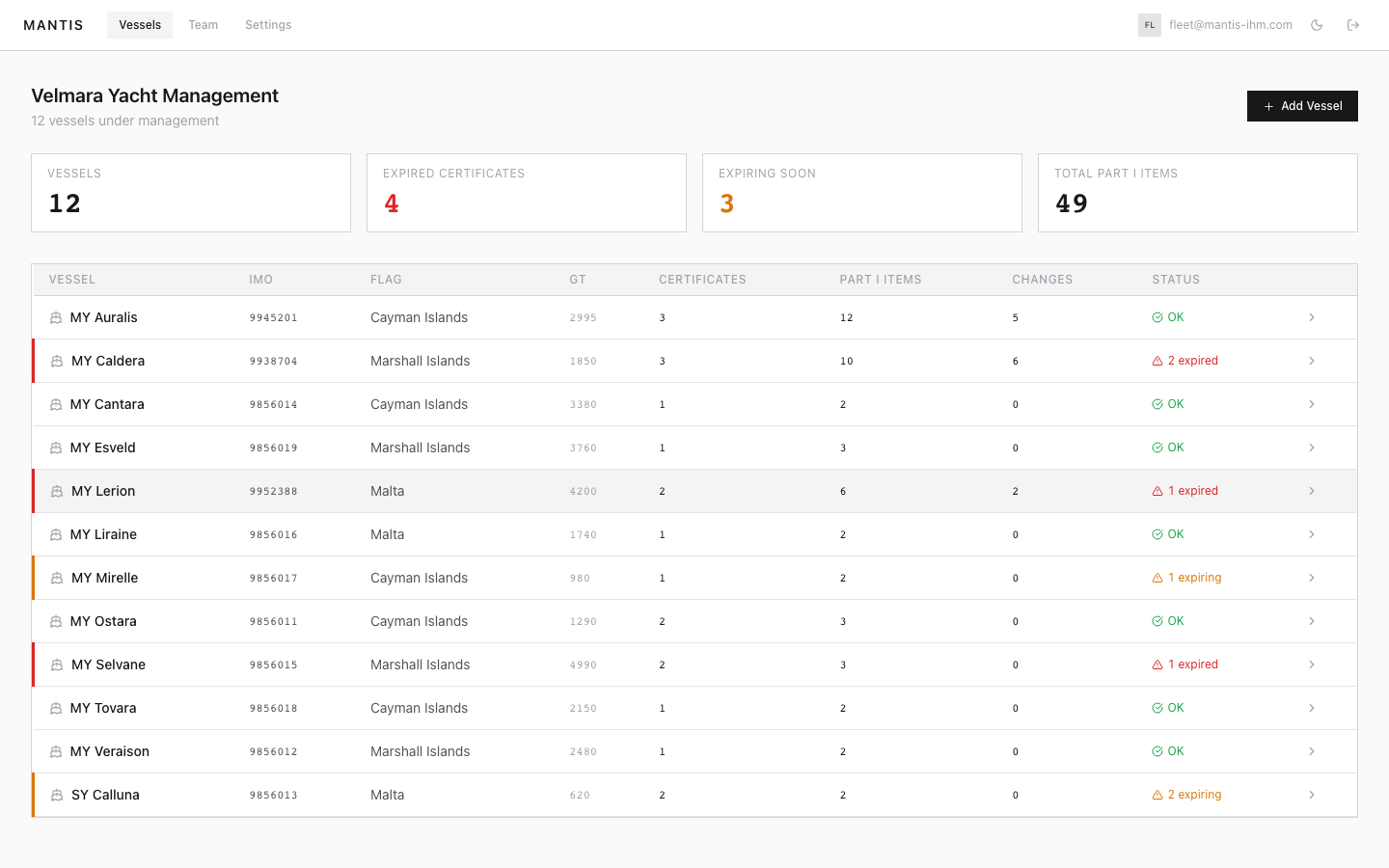
Fleet IHM maintenance software should give every vessel the same live record structure: current Part I entries, supplier MD/SDoC/SDS evidence, certificate dates, change history, open gaps, and repeatable exports. The office should not have to ask each vessel to rebuild the story from files and emails.
What fleet teams need
For IHM, fleet control means:
- One vessel record per vessel
- Consistent Part I change logging
- Supplier evidence attached to the relevant change
- Certificate and survey dates visible across the fleet
- Audit trail for material changes
- Exports that follow the same structure every time
- Role-based access for vessel and office teams
The goal is not to centralise every decision ashore. The goal is to make the record understandable across crew, managers, DPAs, and reviewers.
The fleet dashboard question
A useful fleet view should answer:
| Question | Why it matters |
|---|---|
| Which certificates expire next? | Prevent missed renewal pressure |
| Which vessels have open evidence gaps? | Close issues before survey |
| Which vessels changed during refit? | Check Part I updates happened |
| Which records are ready to export? | Reduce review preparation time |
If the office cannot see those answers without asking each vessel, the system is still too dependent on individuals.
Fleet evidence map
| Record area | Fleet-level answer it should support |
|---|---|
| Part I changes | What changed on each vessel since the last survey? |
| Supplier evidence | Which MD, SDoC, or SDS supports the change? |
| Certificates | Which vessels have renewal pressure coming next? |
| Open requests | Which suppliers or vessel teams still owe documents? |
| Exports | Can each vessel produce the same survey pack format? |
Keep class-agnostic records
Many fleets are mixed: different classes, flags, managers, and operating patterns. That makes class-agnostic records valuable.
The software should help you maintain the underlying inventory and evidence chain, then export what the reviewer needs. It should not trap the operator inside one class-specific portal or one person’s folder structure.
Handover is the hidden fleet problem
Fleet IHM maintenance has a long memory. A refit change recorded today may be reviewed years later. The person who handled the work may have moved on.
That is why the record needs:
- Change history
- Linked evidence
- User audit trail
- Clear vessel ownership
- Repeatable exports
Without those, every handover weakens the IHM.
Common fleet mistakes
- Letting each vessel invent its own evidence folder.
- Tracking certificate dates in a separate office calendar only one person owns.
- Treating MD/SDoC collection as a procurement afterthought.
- Exporting different survey pack formats vessel by vessel.
- Losing the reason behind historical Part I changes during crew or manager handover.
Related reading:
Give every vessel the same IHM operating picture.
MANTIS gives fleet operators a consistent IHM workspace vessel by vessel: Part I records, supplier evidence, certificate tracking, audit trail, and exports.
Request demo