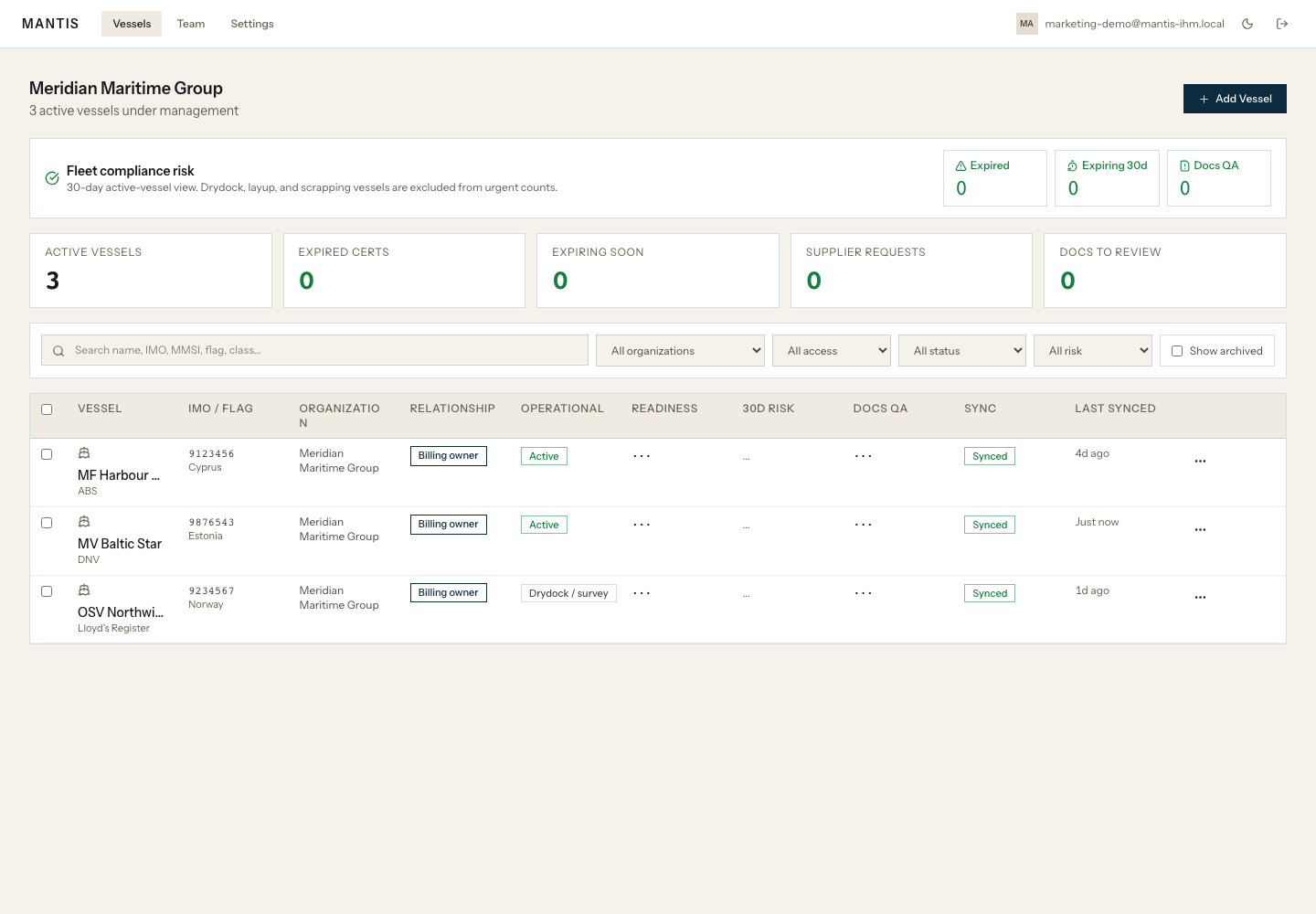
Fleet IHM dashboard
One vessel is manageable. Ten vessels create drift: supplier evidence sits in inboxes, certificate dates move, shared access gets confusing, and stale records surface only when a survey, sale, or handover is already close.
The fleet problem
A supplier replies to one superintendent but not another. A certificate renewal lands in a vessel folder. A manager gets access to one vessel but not the rest of the group. A vessel enters drydock and non-urgent warnings start looking urgent. The dashboard exists to surface those small breaks before they become survey friction.
IHM triage board
The dashboard is not a generic vessel list. It is a triage board for IHM work: owned and shared access, operational state, document risk, supplier evidence gaps, and record freshness in one place.
Access clarity
A vessel can have one primary billing-owner organisation while managers, surveyors, crew, or third parties are invited into specific records. MANTIS shows that relationship clearly so billing ownership and day-to-day access do not blur together.
Compliance risk
Fleet teams can filter by expiring certificates, missing supplier evidence, operational status, organisation, and access type. The dashboard is designed for daily prioritisation, not last-minute document reconstruction.
Preserved history
Vessel offboarding preserves the IHM evidence chain for future audits, handover, or legal review. Hard deletion belongs in a controlled erasure process, not a routine fleet table action.
Fleet data ownership
Fleet IHM software should not trap the operator inside the platform. MANTIS lets organisation owners export the complete customer-owned database records and uploaded evidence for the organisation and billing-owner vessels they control.
The archive is designed for handover, backup, due diligence, legal review, and continuity if you ever leave MANTIS.
See export detailsRelated MANTIS resources
Fleet operations connect directly to IHM maintenance, supplier evidence, security, export rights, and practical operating procedures.
Direct answers
It helps fleet teams see which vessels need IHM attention first: expiring evidence, missing supplier documents, stale records, operational status, owned/shared access, and archived vessel history.
Yes. Users can see vessels they own and vessels shared with them, while MANTIS keeps billing-owner and shared-guest access visibly separate so commercial ownership does not blur with day-to-day management access.
The primary billing-owner organisation is responsible for the vessel licence. Invited managers, crew, auditors, or third parties can be granted access without changing who owns the billing relationship.
Yes. Organisation owners can request a full archive for the organisation and billing-owner vessels they control. The archive is designed to include structured records, uploaded evidence files, audit history, customer-facing indexes, and checksums.
Archiving removes the vessel from the active fleet view and active billing count, while preserving the IHM records, supplier evidence, certificates, and audit history for handover, review, or legal retention.
Add the vessels you expect to manage during the trial. Once the workflow is clear, we can agree practical fleet terms based on quantity and operating model.